Saturday, April 27, 2013
TAZ
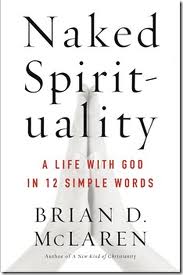
In my small group at WPUMC we're reading Brian McLaren's Naked Spirituality: A Life WIth God In 12 Simple Words. It introduced me to the concept of a Temporary Autonomous Zone (TAZ).
"...rigid conformity and emotional inhibition stultify the human spirit, and so occasionally people defy the authorities and dare to dance. They create what author Kester Brewin describes as Temporary Autonomous Zones (TAZs), places where the normal patterns of hegemony and homogeneity are broken."
This is taken from page 65, quoting Barbara Ehrenreich, and citing examples like Woodstock, Burning Man, Mardi Gras. These events, at their best are about jubilation, freedom, and connection. He continues on page 67.
"Could it be that the kingdom of God is the ultimate TAZ, the ultimate liberation from the normal oppressive patterns of hegemony and homogeneity."
When I was single and child free it was a lot easier for me to resent and resist hegemony and homogeneity. Certainly they were always there, but I did feel freer to choose people, interests, and expression that were outside the norm. I didn't dream of marriage, family, and home ownership. I dreamt of living purposefully, finding a way to make a difference, to be my own, and to be different.
That desire was part of why I chose the graduate school and program that I did. Whole Systems Design (WSD) at an alternative university. My dream took the shape of wanting to write, specifically articles about good news, and then maybe start my own program focused on that kind of story. Producing the stories. Training people to seek, articulate, and promote good news. But WSD didn't work that way for me. It focused on talking and small groups. Not my areas of professional interest. Worse, to me, it didn't help equip me to navigate or talk back to the "real world" of hegemony and homogeneity. I graduated more adrift and vulnerable than I started.
Reentering the "real world" I married my grad school honey, started an interim job, and suddenly fell pregnant. Six years later I'm still at the job working as the sole provider for my little family. I feel trapped in the hegemony and homogeneity of job, home, and child rearing. Any little gap for autonomy is savored, celebrated, and jealously guarded.
These days I find my Temporary Autonomous Zones in my small groups (ironically enough given the grad school debacle), both the Christian group and the Pagan group. Granted, we are not dismantling patriarchy or otherwise disrupting the status quo in publicly recognizable ways. But we are peeling away our conformity and inhibition to unveil to ourselves and these trusted friends our thoughts, feelings, and private realities. And in Pagan ritual we even "dare to dance."
Today it is easy for me to accept grace as the thing that pierces hegemony and homogeneity and frees us to be authentic souls liberated from the rules that stultify human life. This definition holds true to the example of Jesus's life - practicing a life of loving others that put him outside the rules and mores of the law and the culture of his time. He stands as the model of how Christians too ought to live lives of love, lives changed by that grace. I experience this kind of grace in the Pagan rituals as we minister to each other in ceremony, raise energy together, and "party like Pagans."
But it's challenging me and yet I'm hungry for it, to have this grace in the rest of my life in the "real world." (I guess that's why they're "temporary" autonomous zones.) How do I live a daily life of such grace, outside the bounds of hegemony and homogeneity? Is it just part of being fully human that we develop and abide by these conventions? To live in this world, a soul and a body, means we entangle ourselves in these invisible, powerful things. And it's a life of spirituality, of practice and of hunger, that manifests the desire for grace and the means to be grace to ourselves and others.
Monday, April 8, 2013
consciousness & culture
I'm rereading Starhawk's Spiral Dance: A Rebirth of the Ancient Religion of the Great Goddess for the first time in about 15 years. The pagan group I do holiday rituals with has added a book club to its activities and I'm excited to have more time with these good folks and to dig into some good books together.
Starting with the Introduction of this book I'm struck by how many of the same words and phrases are standing out to me now as when I first read, and underlined, the book. The ideas that held my attention then also speak to my life today. Maybe it's something about phases of transition in my life. Or maybe it's a testimony to my years long search for meaning.
"The concept of a religion that worshipped a Goddess was amazing and empowering." p.2
"Now my body, in all its femaleness, its breasts, vulva, womb, and menstrual flow, was sacred." p.2
"Maybe, in fact, deep transformation of society could only come from an underlying transformation of culture." p.6
"To create the changes in consciousness needed to transform society at a deep level, we need insights broader than those the issues of the moment can provide." p.7
Although, thinking about it a little further now, it's almost ironic that the same material has got my attention because I'm approaching it from such a different place. Fifteen years ago I was struggling with the evangelical tradition. I was specifically addressing the roles and possibilities for women in that culture. Today I've found a Christian church led by a woman and where women and men share visible and diverse roles. I'm less concerned now about changing culture and more concerned about changing my own mind, my heart, my life.
I can hear my psychiatrist telling me to "go inside" and I suspect that she would tell me that meaning won't be found in a book or a book club. But maybe this book, with its affirmation of the sacredness of life and the immanence of the divine, with its rituals and exercises, may offer a way inside. And maybe this book club, with its good company of smart, caring, spiritual women, may form a container of kind support as I make the journey inward.
The book isn't just a 'How To Worship the Great Goddess" guidebook. It's also an invitation to create religion, to change consciousness, and to change culture. These are big things. And in small ways I'm already part of them. Our little group of pagan friends creates ritual together 8 times a year. Together, through ritual and socializing we create a little pocket of culture where things are a little different from the mainstream. From that secure space we walk back into our daily lives, and hopefully bring some aspects of it with us. Nothing too radical. But still something very real and special in our lives. And I suppose that's where change, for a person or a group or a society, begins.
Starting with the Introduction of this book I'm struck by how many of the same words and phrases are standing out to me now as when I first read, and underlined, the book. The ideas that held my attention then also speak to my life today. Maybe it's something about phases of transition in my life. Or maybe it's a testimony to my years long search for meaning.
"The concept of a religion that worshipped a Goddess was amazing and empowering." p.2
"Now my body, in all its femaleness, its breasts, vulva, womb, and menstrual flow, was sacred." p.2
"Maybe, in fact, deep transformation of society could only come from an underlying transformation of culture." p.6
"To create the changes in consciousness needed to transform society at a deep level, we need insights broader than those the issues of the moment can provide." p.7
Although, thinking about it a little further now, it's almost ironic that the same material has got my attention because I'm approaching it from such a different place. Fifteen years ago I was struggling with the evangelical tradition. I was specifically addressing the roles and possibilities for women in that culture. Today I've found a Christian church led by a woman and where women and men share visible and diverse roles. I'm less concerned now about changing culture and more concerned about changing my own mind, my heart, my life.
I can hear my psychiatrist telling me to "go inside" and I suspect that she would tell me that meaning won't be found in a book or a book club. But maybe this book, with its affirmation of the sacredness of life and the immanence of the divine, with its rituals and exercises, may offer a way inside. And maybe this book club, with its good company of smart, caring, spiritual women, may form a container of kind support as I make the journey inward.
The book isn't just a 'How To Worship the Great Goddess" guidebook. It's also an invitation to create religion, to change consciousness, and to change culture. These are big things. And in small ways I'm already part of them. Our little group of pagan friends creates ritual together 8 times a year. Together, through ritual and socializing we create a little pocket of culture where things are a little different from the mainstream. From that secure space we walk back into our daily lives, and hopefully bring some aspects of it with us. Nothing too radical. But still something very real and special in our lives. And I suppose that's where change, for a person or a group or a society, begins.
Saturday, June 13, 2009
commonplacing: yeast & the feast
"The Kingdom of Heaven is like yeast," we heard him say, "that a woman took and mixed with three measures of flour until all of it was leavened."
Judith put her hands to her mouth and actually giggled.
"What's so funny?" I wondered.
"Don't you know, Mary? The rabbis consider yeast unclean. Only women handle it. Who but our Jesus would dare to compare it to the Kingdom of God!"
Many times I witnessed the gap-toothed grins of old women, and the clapping and dancing of younger ones as they recognized themselves and their lives in the stories: the persistent widow demanding justice, the woman throwing a party when she finds the lost coin. They needed no explanation. They understood: the Bridegroom was here in their midst. They were invited to the feast." pp 414-415
First, the obvious things that I like about this passage:
1) Jesus speaks directly to women's lives - rather than overlooking us or lumping us into stories where men are normative & primary.
2) Jesus says and does the things that are vitally different from the conventions of his time & place and through that conveys the heart of his message.
3) Jesus used stories about people's real lives to share that message and to welcome & cultivate a community who got the message.
Now, maybe more subtly, how this passage applies to me.
In the last few weeks, my little family took a pause from our church attendance. We need more time as a family, interacting with each other, doing fun stuff, chatting, chasing & getting chased by Baby N.... When we go to church we feel like we give the best hours of the day (before N's nap) to an event that doesn't give us much room to interact with each other. It felt like a loss. Plus, I tend to come home all riled up.
But in the course of Sunday night's June moon ritual, something came to me. I need to go back to church:
1) Because it's good for me to hear other people's ideas about Christianity. Some of the folks in this congregation have powerful love and commitment to Jesus. They tell stories of their experiences of the presence of Christ in their lives.
2) Because I want to do good work in my community and this church does that all day, every day. They are sharing "the feast" in tangible ways (rent, food, recovery groups, access to medical care...). I will be a lot more effective as part of this community than I will be on my own.
3) It's good for me to get riled up. Maybe not every Sunday, & certainly not to the point where I get bitter & dried up, but enough to point me to something vitally different as illuminated by Jesus & to prompt me in how I'm going to live that.
4) [bonus!] This is a congregation of quirky loving folks that I enjoy. They love my son. They welcomed my family from minute 1. (They shared "the feast" even with us?) Churches like this are rare. People like this are to be held onto.
So, this Sunday, Baby N and I will be heading around the corner to church. Instead of family time, L will get a morning to himself - to play bass or read philosophy or take a long bath. All the good refreshing restorative things that a stay-at-home parent rarely gets to do for himself. And we'll work it out, like all families do. We'll keep moving so that each of us is growing and challenged, nurtured and celebrated. And I hope we'll bring a little bit more into our time together from this kind of time apart.
Cunningham, Elizabeth. The Passion of Mary Magdalen. New York: Monkfish. 2006.
Judith put her hands to her mouth and actually giggled.
"What's so funny?" I wondered.
"Don't you know, Mary? The rabbis consider yeast unclean. Only women handle it. Who but our Jesus would dare to compare it to the Kingdom of God!"
Many times I witnessed the gap-toothed grins of old women, and the clapping and dancing of younger ones as they recognized themselves and their lives in the stories: the persistent widow demanding justice, the woman throwing a party when she finds the lost coin. They needed no explanation. They understood: the Bridegroom was here in their midst. They were invited to the feast." pp 414-415
First, the obvious things that I like about this passage:
1) Jesus speaks directly to women's lives - rather than overlooking us or lumping us into stories where men are normative & primary.
2) Jesus says and does the things that are vitally different from the conventions of his time & place and through that conveys the heart of his message.
3) Jesus used stories about people's real lives to share that message and to welcome & cultivate a community who got the message.
Now, maybe more subtly, how this passage applies to me.
In the last few weeks, my little family took a pause from our church attendance. We need more time as a family, interacting with each other, doing fun stuff, chatting, chasing & getting chased by Baby N.... When we go to church we feel like we give the best hours of the day (before N's nap) to an event that doesn't give us much room to interact with each other. It felt like a loss. Plus, I tend to come home all riled up.
But in the course of Sunday night's June moon ritual, something came to me. I need to go back to church:
1) Because it's good for me to hear other people's ideas about Christianity. Some of the folks in this congregation have powerful love and commitment to Jesus. They tell stories of their experiences of the presence of Christ in their lives.
2) Because I want to do good work in my community and this church does that all day, every day. They are sharing "the feast" in tangible ways (rent, food, recovery groups, access to medical care...). I will be a lot more effective as part of this community than I will be on my own.
3) It's good for me to get riled up. Maybe not every Sunday, & certainly not to the point where I get bitter & dried up, but enough to point me to something vitally different as illuminated by Jesus & to prompt me in how I'm going to live that.
4) [bonus!] This is a congregation of quirky loving folks that I enjoy. They love my son. They welcomed my family from minute 1. (They shared "the feast" even with us?) Churches like this are rare. People like this are to be held onto.
So, this Sunday, Baby N and I will be heading around the corner to church. Instead of family time, L will get a morning to himself - to play bass or read philosophy or take a long bath. All the good refreshing restorative things that a stay-at-home parent rarely gets to do for himself. And we'll work it out, like all families do. We'll keep moving so that each of us is growing and challenged, nurtured and celebrated. And I hope we'll bring a little bit more into our time together from this kind of time apart.
Cunningham, Elizabeth. The Passion of Mary Magdalen. New York: Monkfish. 2006.
Sunday, May 17, 2009
chosen, befriended & blessed
"What does it mean to be chosen by God?"
The question derived from today's Gospel reading - a passage about being chosen by God and now being a friend of Christ, rather than a servant. Pastor J posed it to the congregation and then gave us five minutes to discuss it with our neighbors in the pew. Whoah. Huge! I put my head down - not ready to chat about this. The conversations around me wandered away from the topic.
I have no idea what it means... and I know it means so many things. What does it mean to me? Do I even believe it? (& how does it relate to last week's message about acceptance & pruning by God?)
Walking home I remembered reading some encouraging and challenging ideas about being chosen by God in Henri Nouwen's Life of the Beloved. I want to claim his words as my answer to the question... but really I'm still trying to understand & believe it.
"Self-rejection is the greatest enemy of the spiritual life because it contradicts the sacred voice that call us the 'Beloved.' Being the Beloved expresses the core truth of our existence." p. 28
"Becoming the beloved is the great spiritual journey that we have to make." p. 32
"First of all, you have to keep unmasking the world about you for what it is: manipulative, controlling, power-hungry and, in the long run, destructive. The world tells you many lies about who you are, and you simply have to remain realistic enough to reminder yourself of this." p. 49
"Secondly, you have to keep looking for people and places where your truth is spoken and where you are reminded of your deepest identity as the chosen one. Yes, we must dare to opt consciously for our chosenness and not allow our emotion, feelings or passions to seduce us into self-rejection." p. 49-50
"Thirdly, you have to celebrate your chosenness constantly. This means saying 'thank you' to God for having chosen you, and 'thank you' to all who reminded you of your chosenness. Gratitude is the most fruitful way of deepening your consciousness that you are not an 'accident' but a divine choice." p. 50
"When we claim and constantly reclaim the truth of being the chosen ones, we soon discover within ourselves a deep desire to reveal to others their own chosenness. Instead of making us feel that we are better, more precious or valuable than others, our awareness of being chosen opens our eyes to the chosenness of others." p. 52-53
"The characteristic of the blessed ones is that wherever they go, they always speak words of blessing. It is remarkable how easy it is to bless others, to speak good things to and about them, to call forth their beauty and truth, when you yourselves are in touch with your own blessedness. The blessed one always blesses." p. 67
And I think this is the link between last week's message & this week's:
"Becoming the Beloved is pulling the truth revealed to me from above down into the ordinariness of what I am, in fact, thinking of, talking about an doing from hour to hour. ... When our deepest truth is that we are the Beloved and when our greatest joy and peace come from fully claiming that truth, it follows that this has to become visible and tangible in the ways that we eat and drink, talk and love, play and work." pp. 39-40
Nouwen, Henri. Life of the beloved: Spiritual living in a secular world. NY: Crossroads. 1993.
The question derived from today's Gospel reading - a passage about being chosen by God and now being a friend of Christ, rather than a servant. Pastor J posed it to the congregation and then gave us five minutes to discuss it with our neighbors in the pew. Whoah. Huge! I put my head down - not ready to chat about this. The conversations around me wandered away from the topic.
I have no idea what it means... and I know it means so many things. What does it mean to me? Do I even believe it? (& how does it relate to last week's message about acceptance & pruning by God?)
Walking home I remembered reading some encouraging and challenging ideas about being chosen by God in Henri Nouwen's Life of the Beloved. I want to claim his words as my answer to the question... but really I'm still trying to understand & believe it.
"Self-rejection is the greatest enemy of the spiritual life because it contradicts the sacred voice that call us the 'Beloved.' Being the Beloved expresses the core truth of our existence." p. 28
"Becoming the beloved is the great spiritual journey that we have to make." p. 32
"First of all, you have to keep unmasking the world about you for what it is: manipulative, controlling, power-hungry and, in the long run, destructive. The world tells you many lies about who you are, and you simply have to remain realistic enough to reminder yourself of this." p. 49
"Secondly, you have to keep looking for people and places where your truth is spoken and where you are reminded of your deepest identity as the chosen one. Yes, we must dare to opt consciously for our chosenness and not allow our emotion, feelings or passions to seduce us into self-rejection." p. 49-50
"Thirdly, you have to celebrate your chosenness constantly. This means saying 'thank you' to God for having chosen you, and 'thank you' to all who reminded you of your chosenness. Gratitude is the most fruitful way of deepening your consciousness that you are not an 'accident' but a divine choice." p. 50
"When we claim and constantly reclaim the truth of being the chosen ones, we soon discover within ourselves a deep desire to reveal to others their own chosenness. Instead of making us feel that we are better, more precious or valuable than others, our awareness of being chosen opens our eyes to the chosenness of others." p. 52-53
"The characteristic of the blessed ones is that wherever they go, they always speak words of blessing. It is remarkable how easy it is to bless others, to speak good things to and about them, to call forth their beauty and truth, when you yourselves are in touch with your own blessedness. The blessed one always blesses." p. 67
And I think this is the link between last week's message & this week's:
"Becoming the Beloved is pulling the truth revealed to me from above down into the ordinariness of what I am, in fact, thinking of, talking about an doing from hour to hour. ... When our deepest truth is that we are the Beloved and when our greatest joy and peace come from fully claiming that truth, it follows that this has to become visible and tangible in the ways that we eat and drink, talk and love, play and work." pp. 39-40
Nouwen, Henri. Life of the beloved: Spiritual living in a secular world. NY: Crossroads. 1993.
Wednesday, April 8, 2009
my lenten challenge
"But the idea that Jesus was deliberately handed over and abandoned by his Father to the fate of death is intolerable. When you think about it, what kind of Father is this? A sadist. Even Abraham drew back from killing his own son. This construal of the cross blames the Father for what in fact was done to Jesus by the history of human injustice. It schools people in patterns of thought that regard sadistic behavior as legitimate. When translated into spirituality, it encourages them to worship the executioner." p. 63
I am really struggling with Easter this year. It's not a holiday that you can just skip, like Columbus Day. As the centerpiece of the Christian religion you have to deal with the biblical events and their meaning. But what do you have to work with if you reject the notion that a Father God had his Only Son killed for your sake? That story is immediately grisly. Guilt-inducing. Illogical, at least to contemporary thinking. & maybe not coherent with the rest of the Gospel.
In the last couple of years I've encountered some new-to-me interpretations of scripture. There are other ways to understand atonement and, as in the quote above, the crucifixion. Unfortunately, I haven't found a community of believers that I can study and embody this stuff with. The churches I've visited either maintain the conventional interpretations or issue New Age teaching. Neither one sustains the depth and vision I'm seeking.
So I'm trying to find my way this season. I'm still attending church services (I love our quirky little community). And then, often prompted by something in a sermon or hymn, I'm still exploring what else it may all mean - in books, in my journal, and in my heart. The discord between what I'm hearing in my faith community and what I'm hearing in my heart is drawing me to continue my exploration. Surely there is something else, something essentially different, that is still true and it calls me to continue.
Johnson, Elizabeth A. Quest for the Living God: Mapping frontiers in the theology of God. New York: Continuum. 2007
I am really struggling with Easter this year. It's not a holiday that you can just skip, like Columbus Day. As the centerpiece of the Christian religion you have to deal with the biblical events and their meaning. But what do you have to work with if you reject the notion that a Father God had his Only Son killed for your sake? That story is immediately grisly. Guilt-inducing. Illogical, at least to contemporary thinking. & maybe not coherent with the rest of the Gospel.
In the last couple of years I've encountered some new-to-me interpretations of scripture. There are other ways to understand atonement and, as in the quote above, the crucifixion. Unfortunately, I haven't found a community of believers that I can study and embody this stuff with. The churches I've visited either maintain the conventional interpretations or issue New Age teaching. Neither one sustains the depth and vision I'm seeking.
So I'm trying to find my way this season. I'm still attending church services (I love our quirky little community). And then, often prompted by something in a sermon or hymn, I'm still exploring what else it may all mean - in books, in my journal, and in my heart. The discord between what I'm hearing in my faith community and what I'm hearing in my heart is drawing me to continue my exploration. Surely there is something else, something essentially different, that is still true and it calls me to continue.
Johnson, Elizabeth A. Quest for the Living God: Mapping frontiers in the theology of God. New York: Continuum. 2007
Friday, March 6, 2009
rote & ritual
"Still I miss Jewish ways. I miss the rhythms and routines that drew the sacred into the everyday. I miss Sabbaths on which I actually rested. I have even found that I miss the drudgery of keeping kosher. I miss the work these practices effected between me and God." p. vii
"Your faith might come and go, but your practice ought not waver. (Indeed, Judaism suggests that the repeating of practice is the best way to ensure that a doubter's faith will return.)" p. ix
For years I have tried and faltered and wished for "rhythms and routines that drew the sacred into the everyday." I want daily actions and seasonal traditions in order to honor the sacred that I know and experience. But I also want them to hold a place for what I have not experienced and yet hope to know.
I think of these rituals and daily practices like a skeleton or a bowl. They bear witness that there is hot rich marrow to fill these bones, flesh and life to clothe them. There is something, however numinous, that this bowl is waiting to hold.
By tending these containers I invite the Holy to me, into my life.
Winner, Lauren. Mudhouse Sabbath. Brewster, MA: Paraclete Press. 2003
"Your faith might come and go, but your practice ought not waver. (Indeed, Judaism suggests that the repeating of practice is the best way to ensure that a doubter's faith will return.)" p. ix
For years I have tried and faltered and wished for "rhythms and routines that drew the sacred into the everyday." I want daily actions and seasonal traditions in order to honor the sacred that I know and experience. But I also want them to hold a place for what I have not experienced and yet hope to know.
I think of these rituals and daily practices like a skeleton or a bowl. They bear witness that there is hot rich marrow to fill these bones, flesh and life to clothe them. There is something, however numinous, that this bowl is waiting to hold.
By tending these containers I invite the Holy to me, into my life.
Winner, Lauren. Mudhouse Sabbath. Brewster, MA: Paraclete Press. 2003
Saturday, February 28, 2009
lord of the dance
Elizabeth A. Johnson in Quest for the Living God, expanding on the analogy between perichoresis and the cognate word for choreography:
"If God is dancing, why not step out to the contagious rhythms of salsa, merengue, calypso, swing, or reggae or to the intricate a-rhythmic patterns of modern dance? The point is, with the three circling around in a mutual, dynamic movement of love, God is not a static being but a plenitude of self-giving love, a saving mystery that overflows into the world of sin and death to heal, redeem, and liberate. The whole point of this history of God with the world is to bring the world back into the life of God's own communion, back into the divine dance of life." (p. 214)
The word perichoresis first caught my attention while I was reading for my master's thesis. What a funny word! Broken into its parts it's: peri - around + choresis - dancing. I didn't entirely get it. It was something to do with the trinity, the communion of those aspects, and them giving to everything else. What has God "dancing around" got to do with any of that? But it certainly captures the imagination. I mean, imagine the trinity that way - not some dry theological fine point anymore, is it. I noted it in my blog and kept on with my reading.
So it's like running into a friend of a friend at my favorite take-out place to find that word again in another book that is significant to me. Maybe we'll get to know each other a little better this time.
The word was embedded in a chapter devoted to the recall and revitalization of the trinity as an expression and understanding of an essentially different relationship with God made possible through Christ. A trinitarian description of God began as a vivid articulation that in addition to the God whose name is YHWH and goes unspoken, there is also God as we know in the historical life of Jesus and God as we know in the ongoing presence of the Spirit. YHWH drew near to us, nearer than a burning bush or still small voice, by living with us as one of us, extending that solidarity to the point of death. That is a phenomenal gift. It continues with Jesus' resurrection and upon his return to Heaven we perceive the Holy Spirit which remains with us granting insight, supporting & prompting change in the world, offering comfort in the midst of this great work.
Getting back to perichoresis, Johnson leads up to it with this description on the previous page, "The holy mystery of God is not a single monolith with a rigid nature, an undifferentiated whole, but a living fecundity of relational life that overflows to the world."
And now I start to get it. There is a Mystery. We learn to let it be Mystery and simultaneously we try to articulate what we have observed and experienced of it. We say, "it is a Transcendent Other, and an Historical Man, and an Immanent Companion." We say anything about it at all because we want to honor it (along with our less flattering motives). We believe, and the evidence of these three ways of meeting the Mystery fosters that belief, that it wants to know and be known, love and be loved, by us.
Johnson, Elizabeth A. Quest for the Living God: Mapping frontiers in the theology of God. New York: Continuum. 2007
"If God is dancing, why not step out to the contagious rhythms of salsa, merengue, calypso, swing, or reggae or to the intricate a-rhythmic patterns of modern dance? The point is, with the three circling around in a mutual, dynamic movement of love, God is not a static being but a plenitude of self-giving love, a saving mystery that overflows into the world of sin and death to heal, redeem, and liberate. The whole point of this history of God with the world is to bring the world back into the life of God's own communion, back into the divine dance of life." (p. 214)
The word perichoresis first caught my attention while I was reading for my master's thesis. What a funny word! Broken into its parts it's: peri - around + choresis - dancing. I didn't entirely get it. It was something to do with the trinity, the communion of those aspects, and them giving to everything else. What has God "dancing around" got to do with any of that? But it certainly captures the imagination. I mean, imagine the trinity that way - not some dry theological fine point anymore, is it. I noted it in my blog and kept on with my reading.
So it's like running into a friend of a friend at my favorite take-out place to find that word again in another book that is significant to me. Maybe we'll get to know each other a little better this time.
The word was embedded in a chapter devoted to the recall and revitalization of the trinity as an expression and understanding of an essentially different relationship with God made possible through Christ. A trinitarian description of God began as a vivid articulation that in addition to the God whose name is YHWH and goes unspoken, there is also God as we know in the historical life of Jesus and God as we know in the ongoing presence of the Spirit. YHWH drew near to us, nearer than a burning bush or still small voice, by living with us as one of us, extending that solidarity to the point of death. That is a phenomenal gift. It continues with Jesus' resurrection and upon his return to Heaven we perceive the Holy Spirit which remains with us granting insight, supporting & prompting change in the world, offering comfort in the midst of this great work.
Getting back to perichoresis, Johnson leads up to it with this description on the previous page, "The holy mystery of God is not a single monolith with a rigid nature, an undifferentiated whole, but a living fecundity of relational life that overflows to the world."
And now I start to get it. There is a Mystery. We learn to let it be Mystery and simultaneously we try to articulate what we have observed and experienced of it. We say, "it is a Transcendent Other, and an Historical Man, and an Immanent Companion." We say anything about it at all because we want to honor it (along with our less flattering motives). We believe, and the evidence of these three ways of meeting the Mystery fosters that belief, that it wants to know and be known, love and be loved, by us.
Johnson, Elizabeth A. Quest for the Living God: Mapping frontiers in the theology of God. New York: Continuum. 2007
Subscribe to:
Posts (Atom)

